
LOUISE JANIN (Durham, New Hampshire, USA 1893 – Meudon, France 1997)
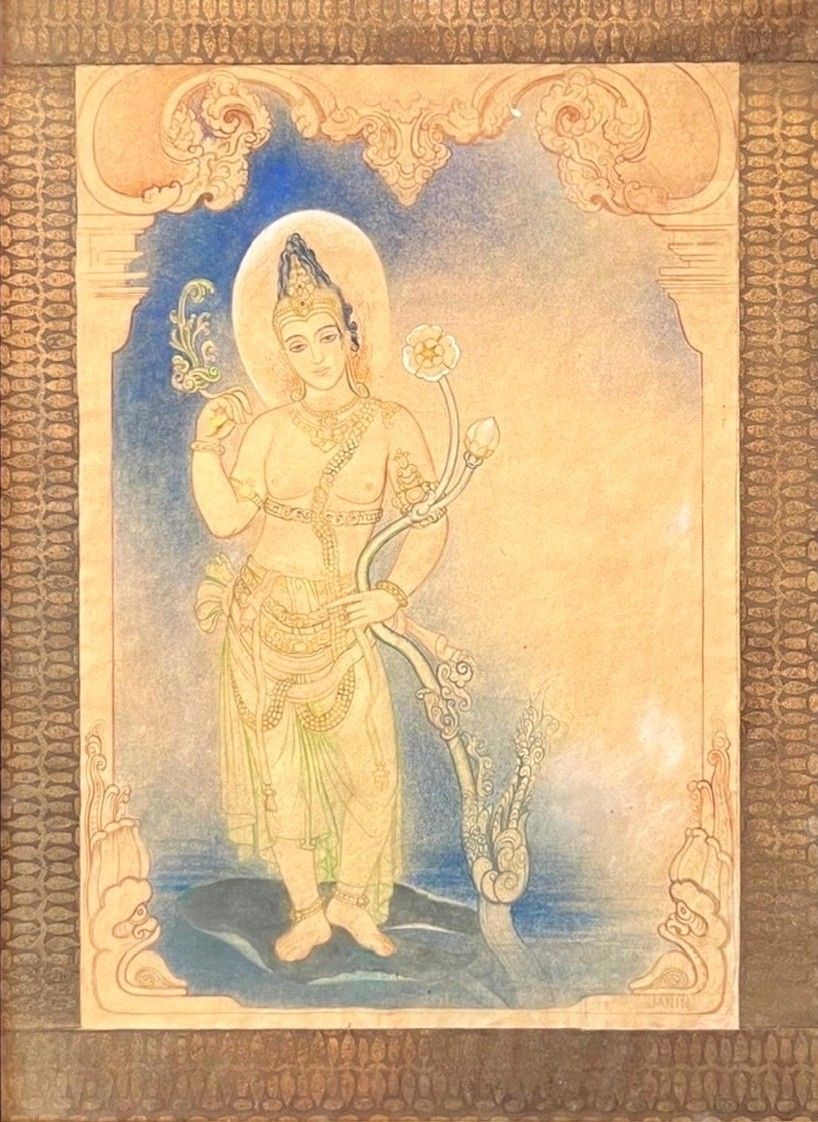
Louise Janin was an American painter and poet who settled in Paris in 1923. Born into a wealthy family of French descent, she grew up surrounded by Asian artworks collected by her father. This early familiarity with unusual artistic objects fueled her imagination, which became populated by deities, animals, and symbolic forms—elements that would remain a constant presence in her work.
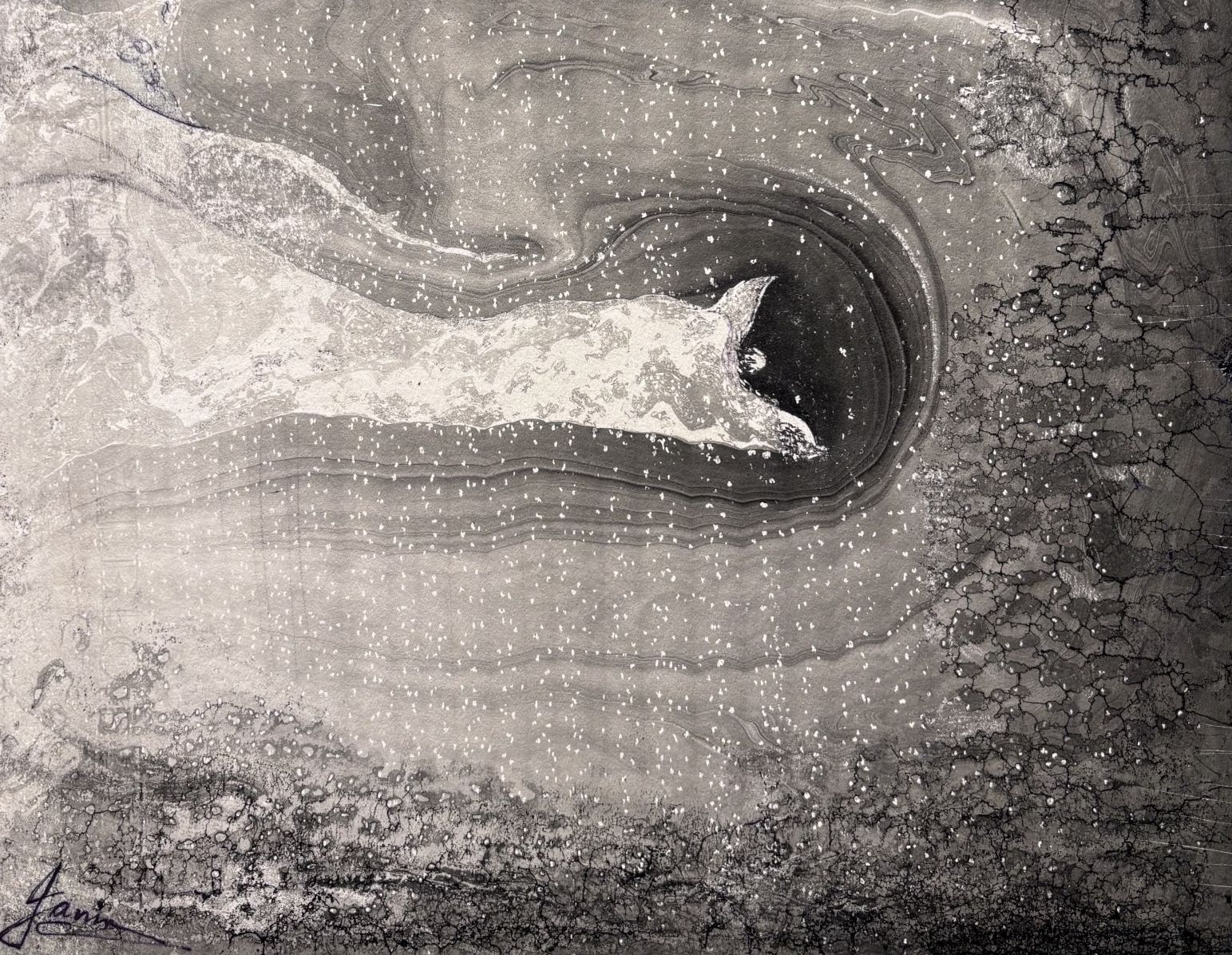
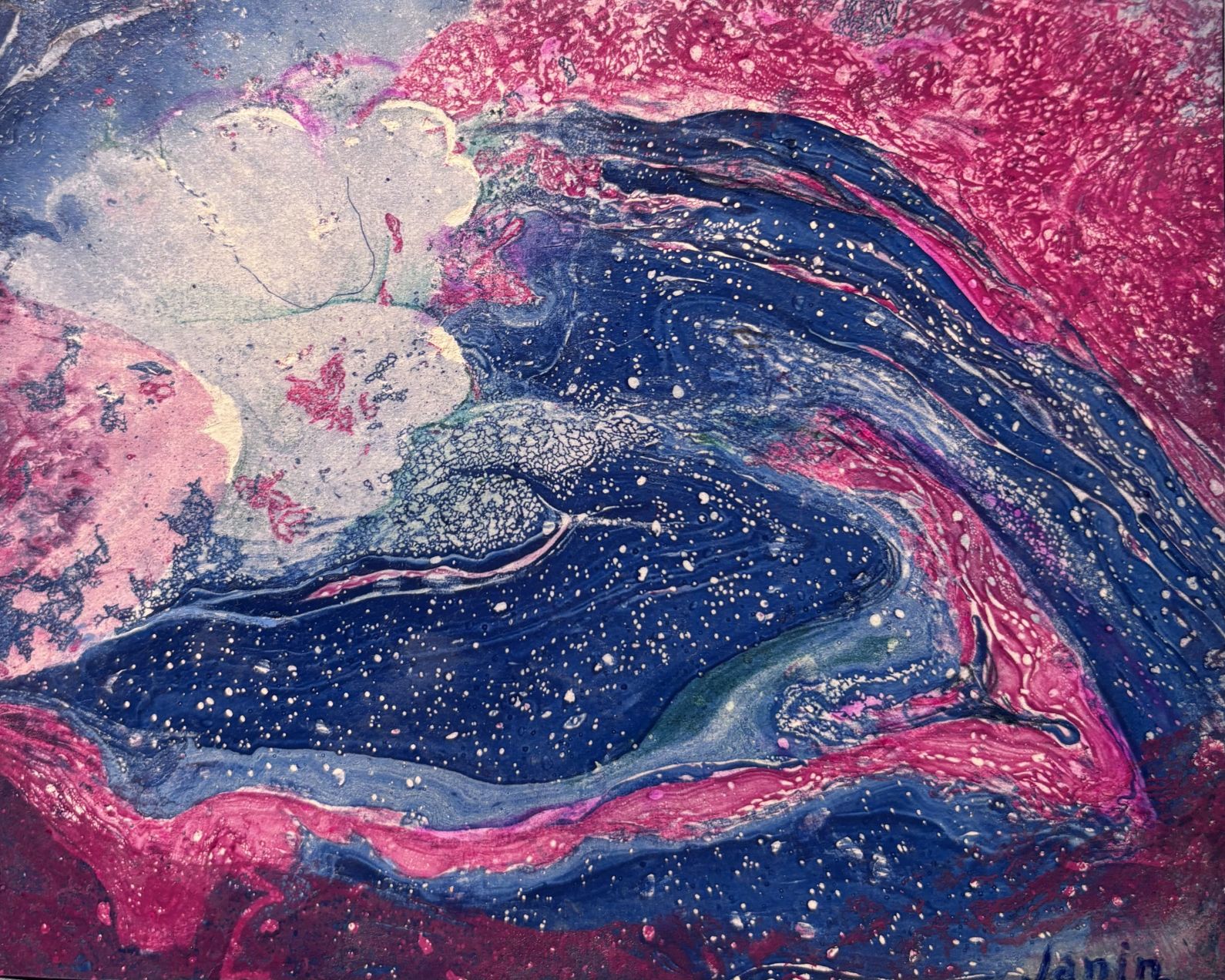
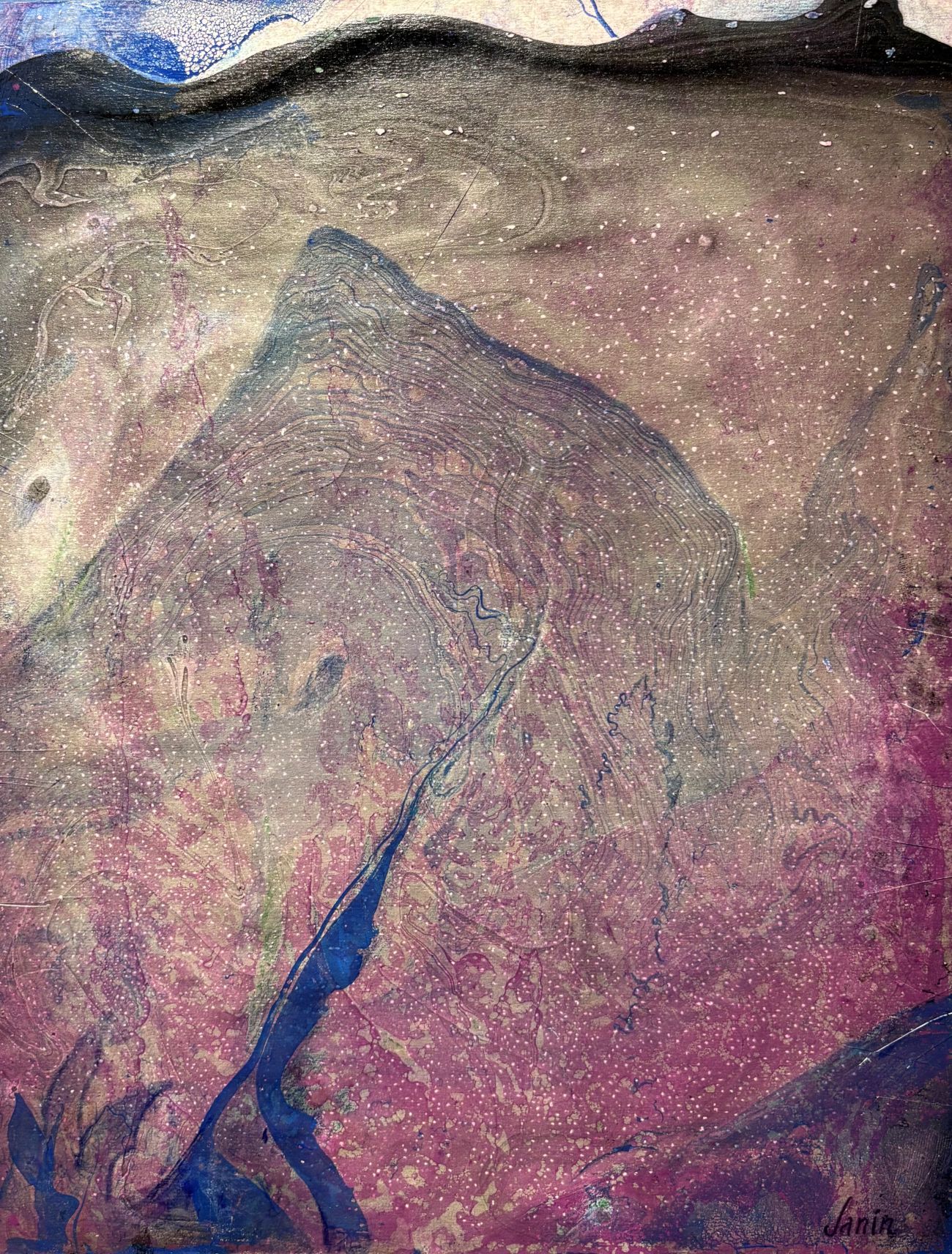
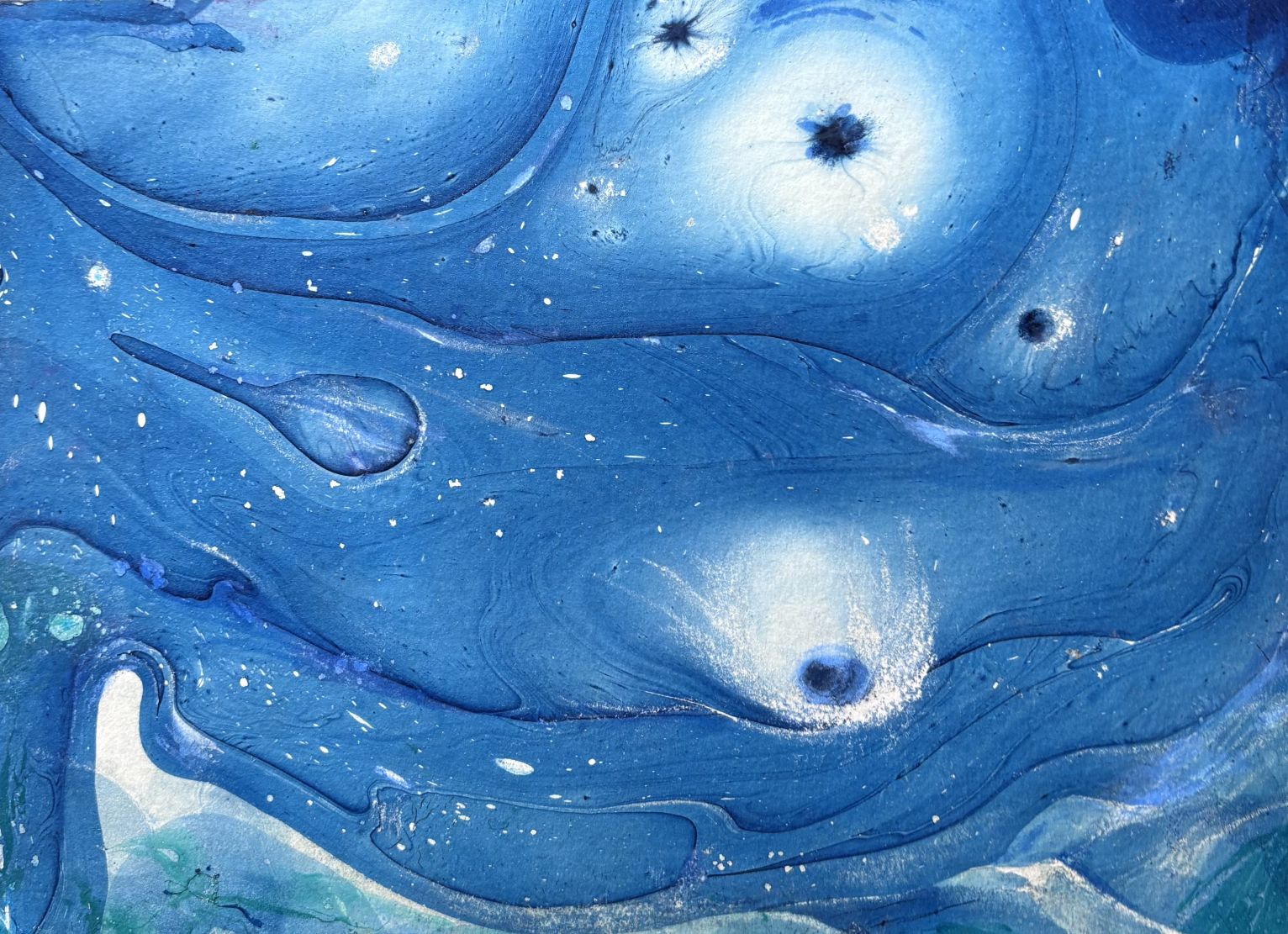
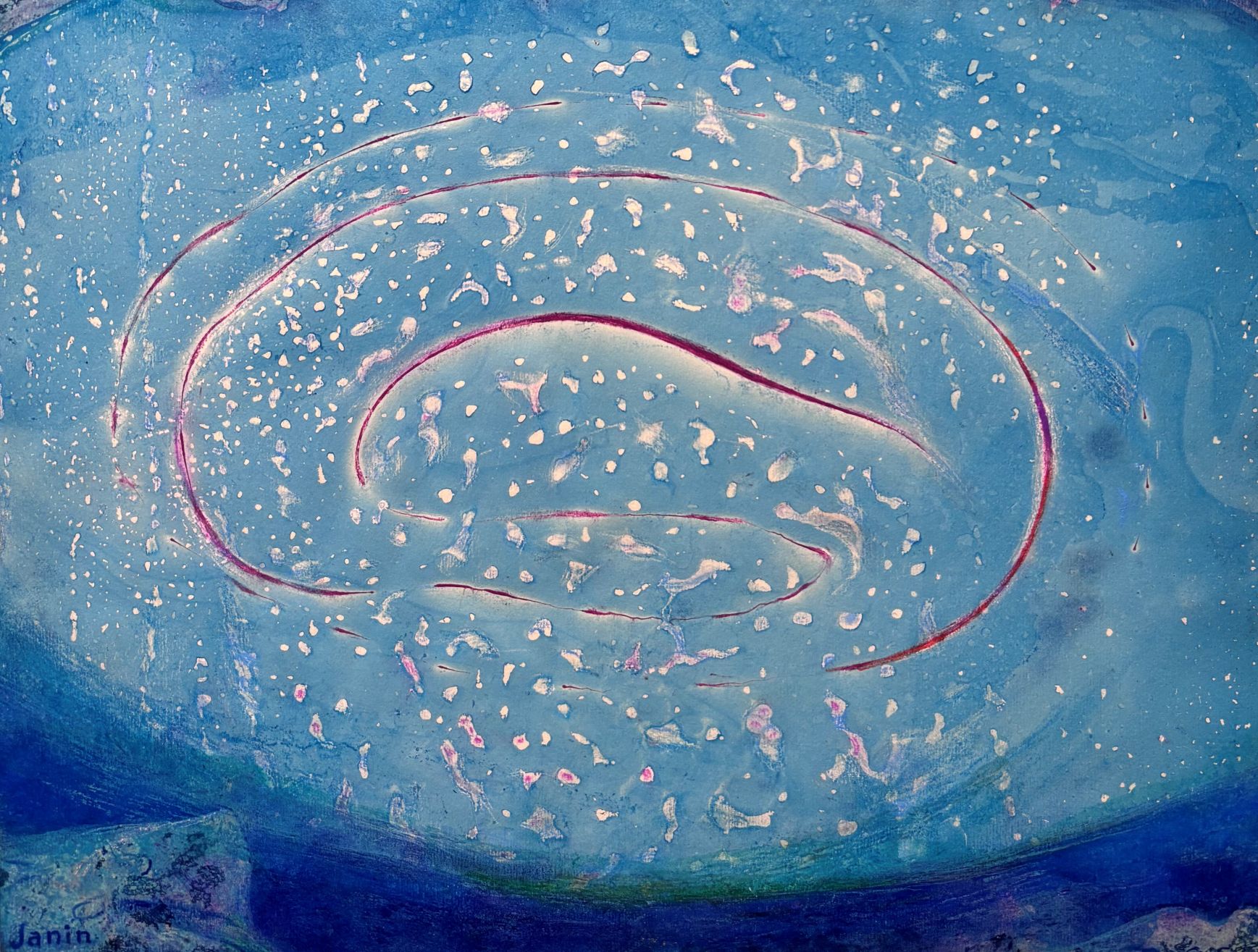
From a very young age, she dedicated herself to painting, later receiving her training at the California School of Fine Arts in San Francisco. A long trip to Asia in 1915 deepened her interest in Asian philosophies and mythologies, which influenced her early works—pieces that were exhibited in the late 1910s. Following a period in New York, she moved to Paris, where her career developed rapidly. Beginning in 1924, she exhibited at the Galerie Bernheim-Jeune and the Galerie Georges Petit, as well as in major salons and international exhibitions, establishing herself in the field of the decorative arts. A decisive turning point occurred in the mid-1920s when she met František Kupka. Her work gradually moved away from descriptive figuration toward more synthetic forms, structured through symbolic and cosmic references. In 1932, at the invitation of Henry Valensi, she joined the “Musicalism” movement, participating regularly in its exhibitions for several decades. The war years were marked by her internment at the Ponte-Nuovo camp in Corsica, where she had been staying as a guest of a friend. She was only able to return to her Parisian studio in February 1946. Following the war and her experience of internment, her work became increasingly abstract. In the early 1950s, she began developing an art form that served as a variation on the marbling techniques often used to decorate the endpapers of antique books. She had first encountered this technique in 1925, while visiting an exhibition of decorative arts in Paris. For Janin, adopting this method initiated years of experimentation, during which the pronounced materiality of the creative process became imbued with cosmic associations. From 1953 onward, she referred to these works as “cosmograms.” She worked with a wide range of colors and inks, employing a combination of oil- and water-based liquids mixed with pigments, and utilizing various types of paper—including the backs of envelopes she received in the mail. Rather than submerging the paper in a mixture, she applied the liquids directly to the surface using droppers, sprayers, and spoons—alongside other unique or poetic “tools,” such as a seashell or even a breath of air—before manipulating the sheet to coax forms into being. As she herself noted, this technique demanded greater experience and skill than traditional painting. Creating a work of art without the aid of brushes or pencils was a complex endeavor, requiring both an openness to chance and a remarkable degree of dexterity. Within these compositions, metamorphic shapes evoke plants, landscapes, and flowers—all while retaining their poetic allure—thereby serving as a bridge between nature and humanity, mythology and lived experience, the Earth and the Cosmos. Over the years, Janin continued to produce her rhythmic chromatic compositions and cosmograms, exhibiting regularly at the Salon des Indépendants, the Salon des Femmes Peintres, and the Salon d’Automne. Alongside her painting, Janin was also highly active as a writer. She published articles and poems in journals across France, the United States, and India, reflecting a broad intellectual interest in art and spirituality.
In 1993, a centenary exhibition was held at the Galerie 1900-2000 in Paris, and her final exhibition took place when the artist was 103 years old.
Louise Janin continued to paint daily until the very end of her exceptionally long life.
EXHIBITIONS
1918 Courvoisier Gallery-Boutique, San Francisco.
1921/22 Exhibitions at the Ehrich Gallery in New York, followed by further shows in Chicago and St. Louis.
1924 Solo exhibition at the Galerie Bernheim-Jeune. Group exhibitions at the Salon des Orientalistes, the Galerie Georges Petit, and the *Femmes Peintres et Sculpteurs* (Women Painters and Sculptors) society.
1925 Winner of the Prix Paillard at the Salon of the Pavillon de Marsan; participant in five sections of the Exposition Internationale des Arts Décoratifs in Paris, where she was awarded a Diplôme d’Honneur.
1927 Panels for the Studium of the Grands Magasins du Louvre at the International Exhibition of Decorative Arts, Madrid. Group exhibition at the Galerie Seligman.
1928 Solo exhibition at the Galerie Georges Petit, Paris.
1929 Solo exhibitions at the Courvoisier Gallery in San Francisco and the Milch Gallery in New York.
1927 Panels for the *Studium* of the *Grands Magasins du Louvre* at the International Exhibition of Decorative Arts, Madrid. Group exhibition at the Galerie Seligman.
1931 A group of paintings was presented at the Hindustan Pavilion as part of the Colonial Exhibition at the Parc de Vincennes, Paris.
1932 First “Salon Musicaliste” held at the Galerie de la Renaissance, 11 Rue Royale, Paris, from December 20 to January 19, 1933.
1934–35 Second “Salon Musicaliste” at the Galerie Bernheim-Jeune, and a third at the Galerie de la Renaissance.
1937 A collection of works was presented at the International Exhibition of Arts and Techniques in Modern Life.
1946 The Musicalist movement reformed and exhibited at the first “Salon des Réalités Nouvelles.”
1949 Solo exhibition at the Galerie Raymond Duncan, Paris. Exhibition at the Galerie Breteau, Paris.
1953 Solo exhibitions at the Galerie Potterat, Avenue du Théâtre 8, Lausanne, and at the Galerie Chedel, Geneva.
1954 Exhibition with the sculptor Lambert-Rucki at the Galerie du Colisée, Paris.
1955 The Musicalistes left the “Salon des Réalités Nouvelles” and exhibited at the “Salon Comparaisons.”
1956 “Hierogramme” was acquired by the City of Paris. Received the Grand Prix from the A.F.A.I. (International Association of Women Artists) in Cannes.
1959 Publication of a book by Jean-Jacques Levêque: *Louise Janin*, coinciding with an exhibition at the Galerie Breteau.
1960 Group exhibition at the Galerie Studio, Saint-Germain.
1963 Exhibition at the Musée de Lyon as part of a tribute to Valensi: “Valensi and Musicalism.”
1973 Retrospective exhibition of the Musicalistes’ salons at the Galerie Hexagramme, Paris.
1974 Participated in the International Salon of Lugano, “Painting and Music.” 1975 During this period, Janin regularly exhibits at the Salon des Indépendants, the Salon d’Art Sacré, the Salon des Femmes Peintres, and the Salon d’Automne.
1985 She presents numerous works at Galerie DUO, 15 Rue de Lille, Paris.
1988 A retrospective is held at the Musée Victor Duhamel in Mantes-la-Jolie. Louise Janin receives the City Medal.
1988 A retrospective is held at the Musée Victor Duhamel in Mantes-la-Jolie. Louise Janin receives the City Medal.
1989 She participates in the exhibition “Coloniales” at the Musée de Boulogne-Billancourt.
1990 The exhibition “Qu’est-ce que le Musicalisme?” (What is Musicalism?) is held at Galerie Drouart in Paris.
1993 A solo exhibition takes place at Galerie 1900-2000 (Marcel Fleiss) in Paris, marking her centenary.
1996 Her final exhibition, “Louise Janin – peintres musicalistes,” is held from September 27 to November 9 at Galerie Patrice Trigano in Paris.
2022 Several works are included in the exhibition “Creative Spirits” at the College of Psychic Studies in London, curated by Vivienne Roberts.
2025 Two works are included in the exhibition “Queer Modernism” at the K20 Kunstsammlung Nordrhein-Westfalen, Düsseldorf, curated by Anke Kempkes.
2026 Louise Janin: “The Echo of the Spirit Through the Rhythms of Life” at the GPS Gallery, Soho, London, curated by Simon Grant and Vivienne Roberts.
2026–27 “Louise Janin, Cosmograms: The Hidden Laws of the Universe” at Galleria d’Arte Pirra, Turin.