
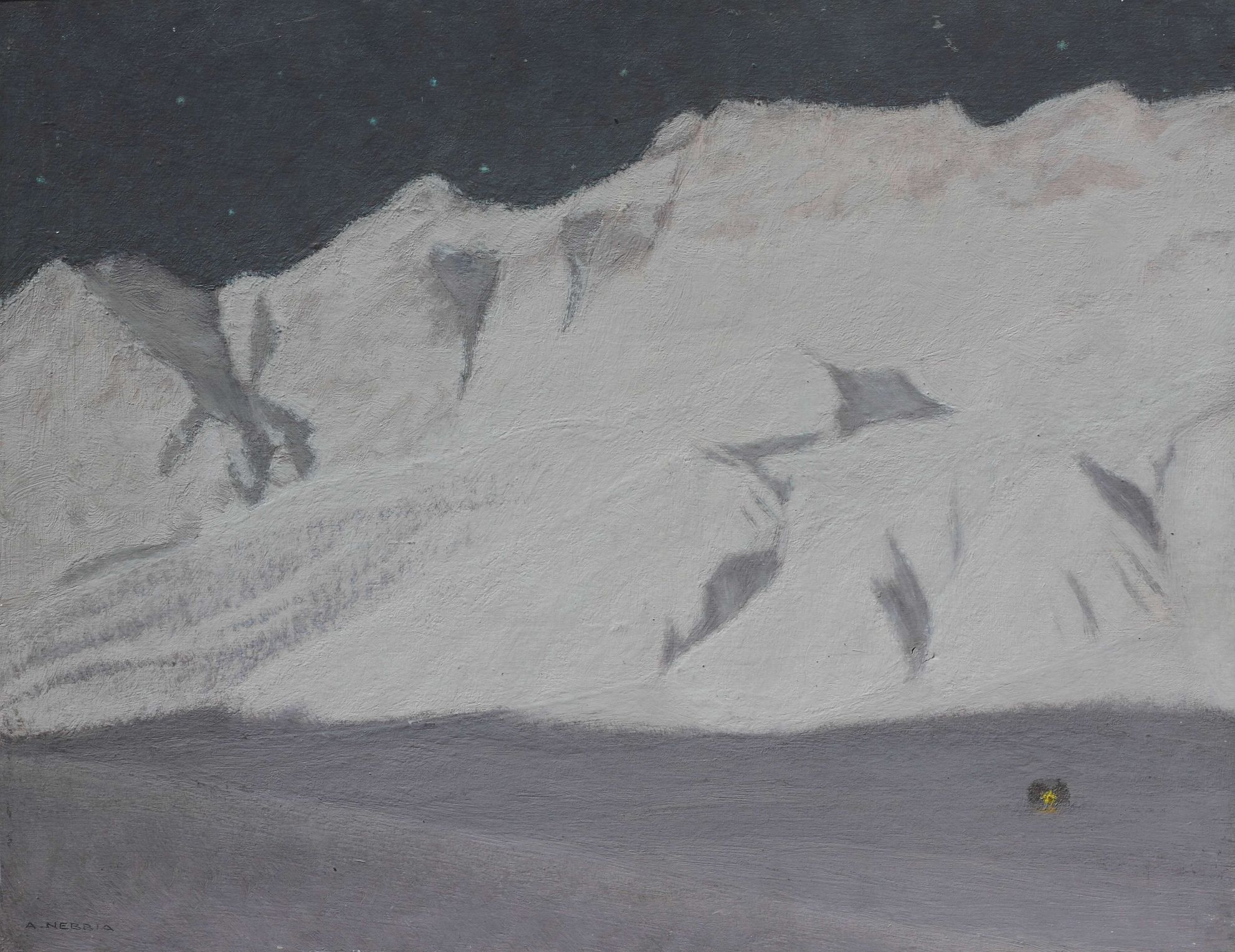
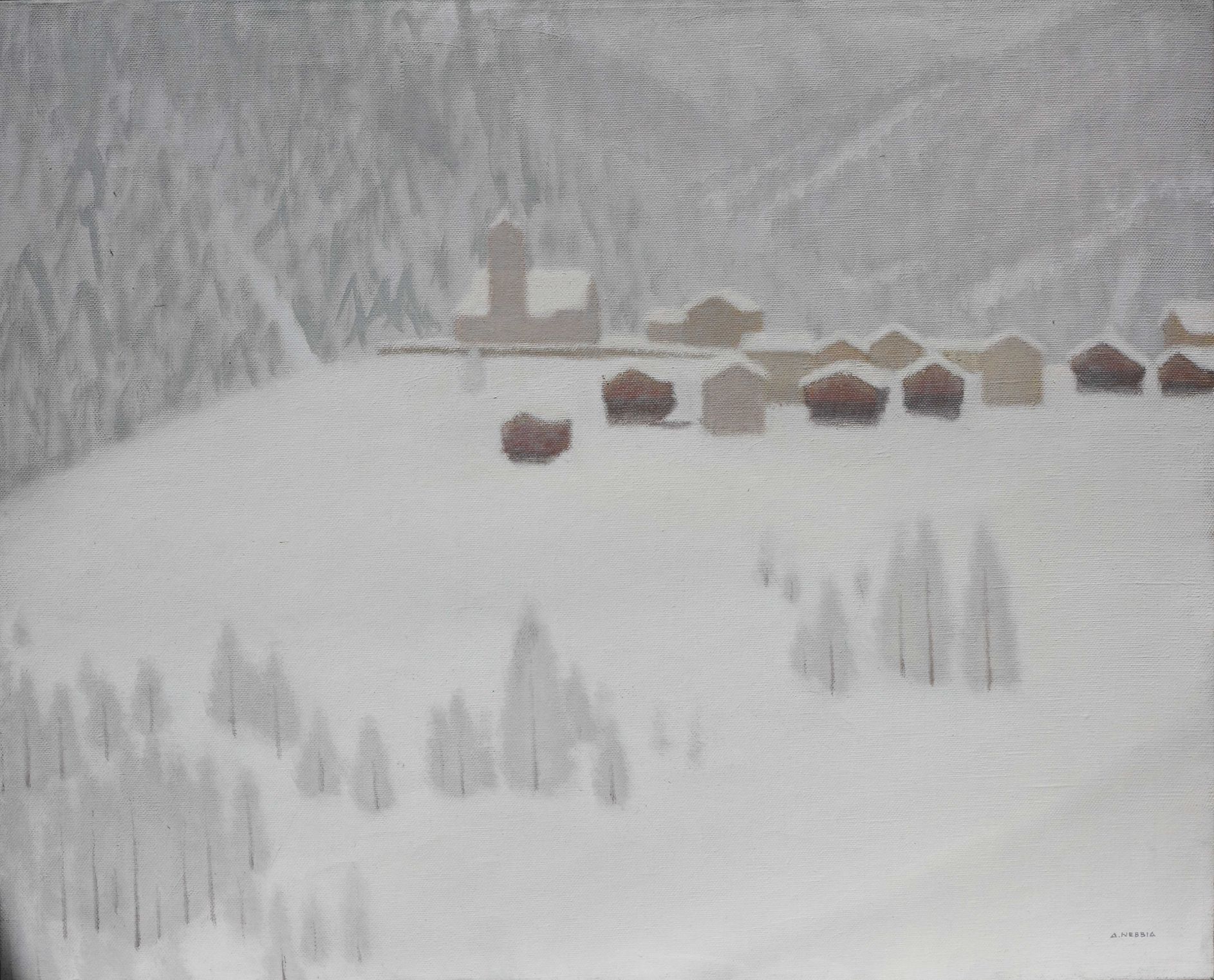
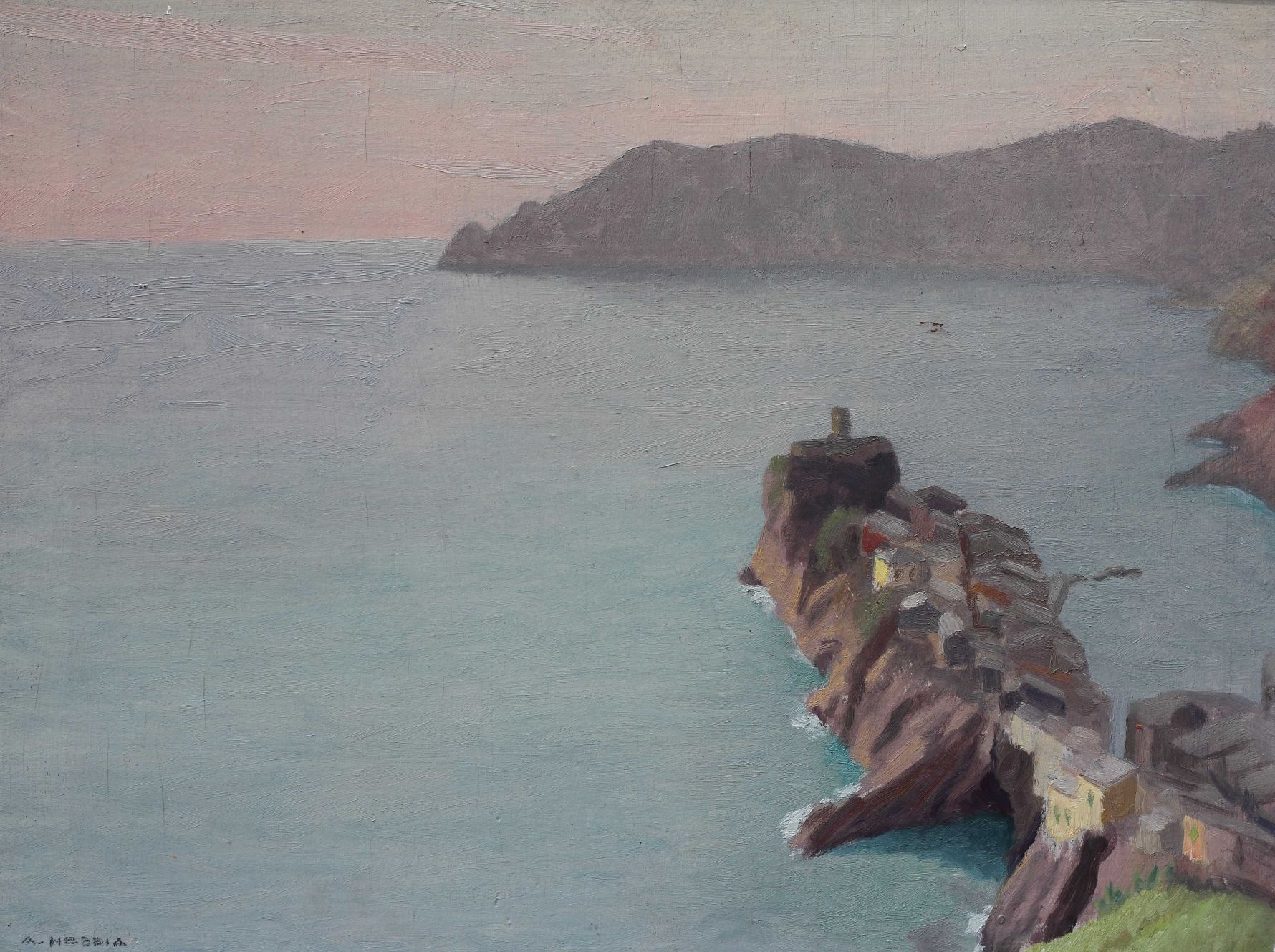
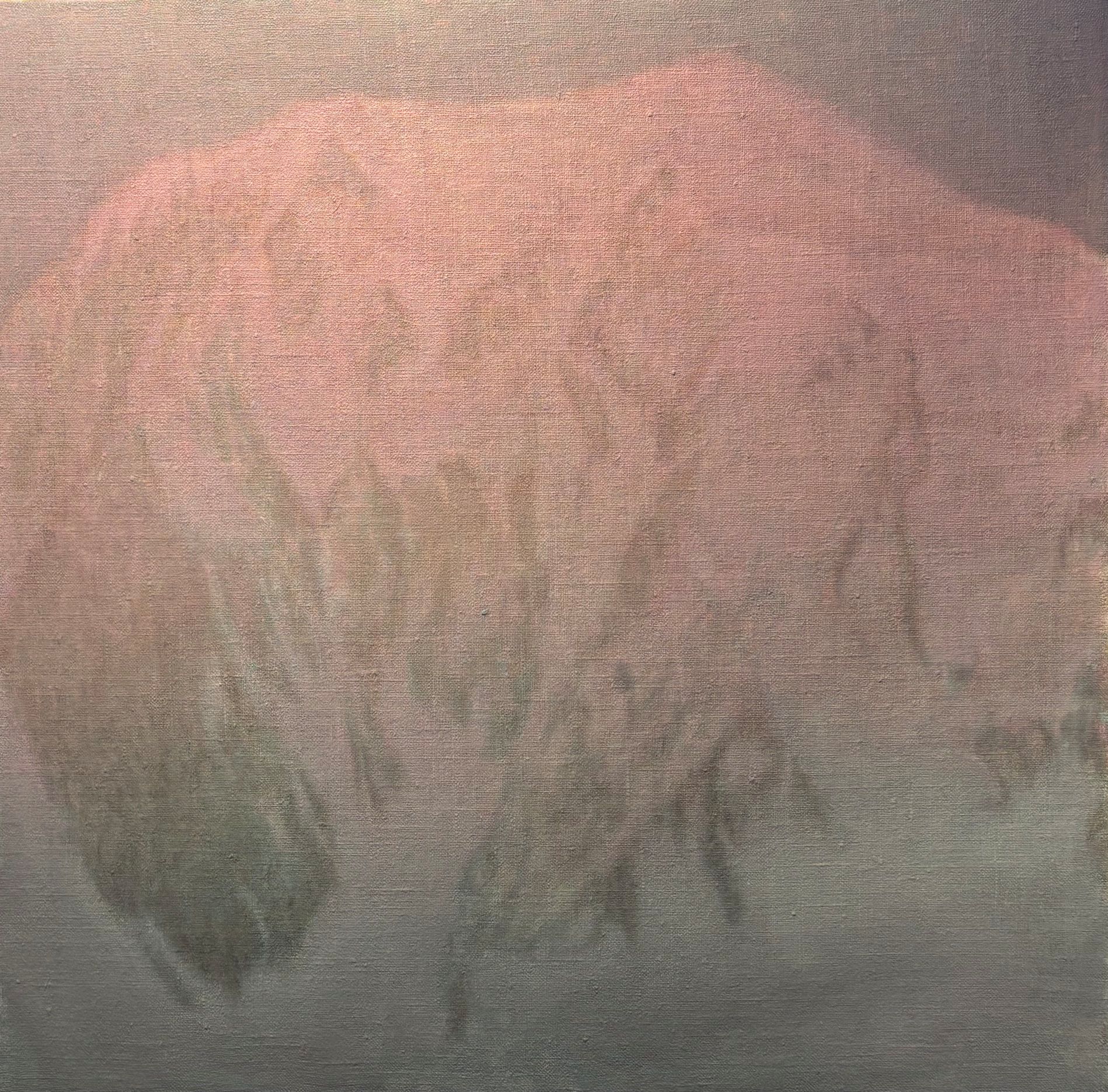
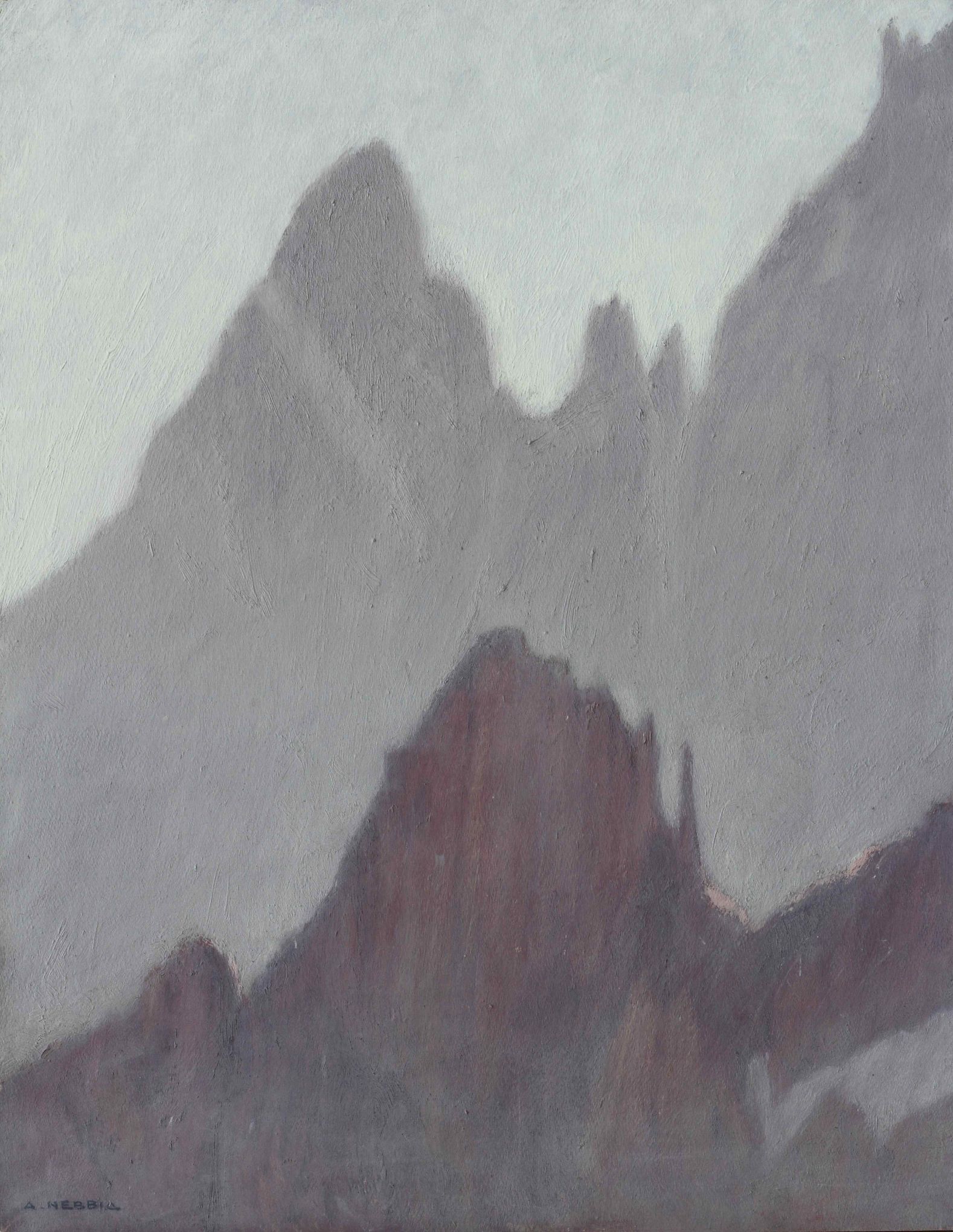
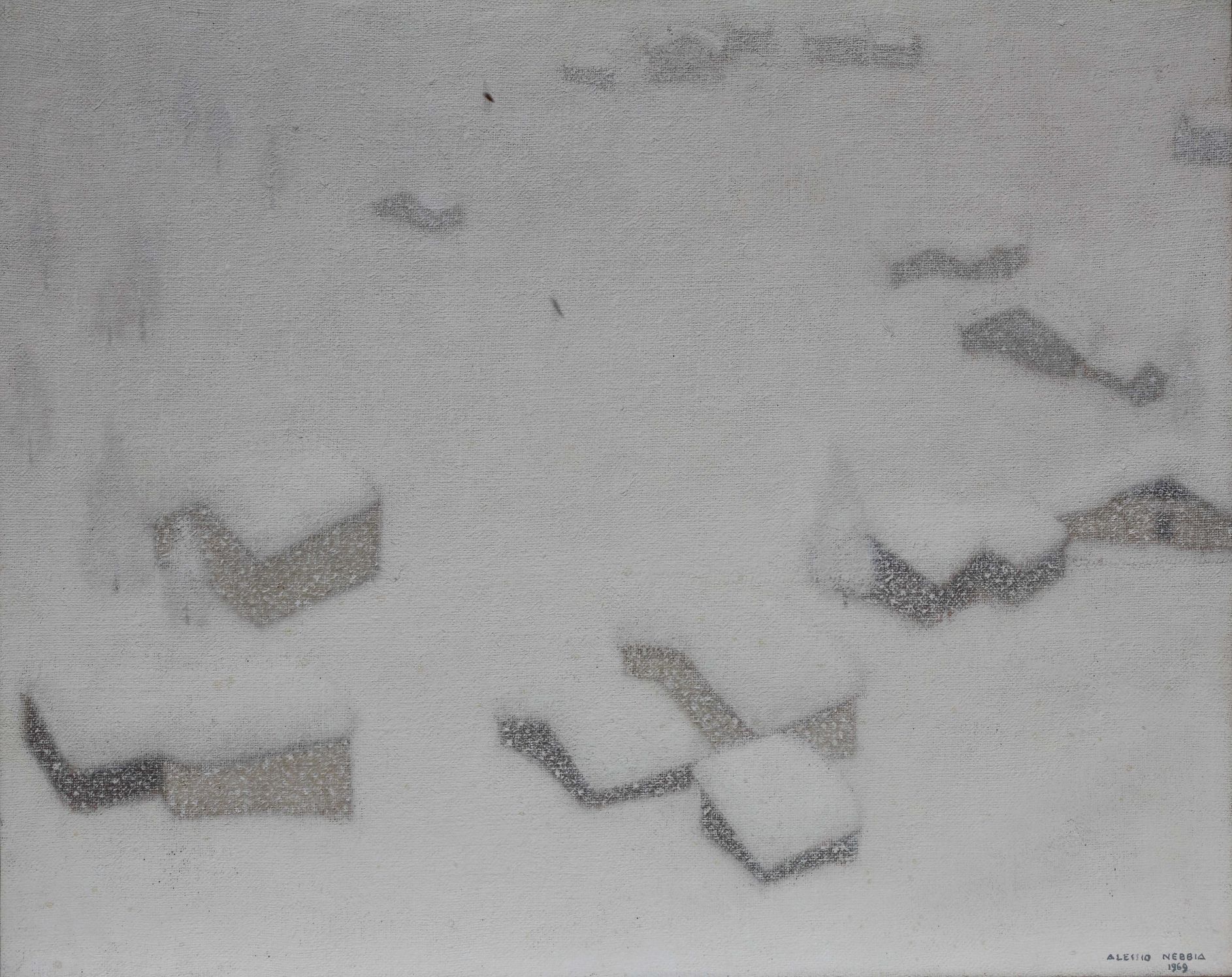
Alessio NEBBIA (Castello d’Annone, Asti 1896 – Cuneo 1975)
Alessio Nebbia was born in Castello d’Annone, near Asti, on February 9, 1896. In Turin, he attended the School of Arts and Crafts. After graduation, lacking the means to study painting as he had desired, he found work as a mechanical draftsman. However, he continued to cultivate his interest in art by regularly visiting exhibitions and museums. At the same time, he became interested in the mountains, so prevalent around Turin.
He frequented the Giovane Montagna movement and took part in the excursions it promoted, which were enthusiastically attended by young people from the Turin, Ivrea, and Aosta sections, such as Pier Giorgio Frassati, Natale Reviglio, Renato Chabod and Abbé Joseph Henry. Convinced by this contact with nature and dissatisfied with mechanical work, in 1925 he left the city and moved to Courmayeur, where he had the opportunity to develop his own artistic vision centered on the mountains. His technical training initially directed him towards photography and the representation of the main mountain massifs on maps and models in perfect scale and with extraordinary realistic precision (an orthorama of the Mont Blanc chain; a model of the Matterhorn and Monte Rosa, a model of Mont Blanc, and a model of the entire Aosta Valley).
Alessio Nebbia’s passion for the geography of the mountain region led him to highlight its characteristics, describing them in depth in several articles published in the Giovane Montagna magazine, relating to Rocciamelone and Valtournenche. In 1926, he opened the Bottega d’Arte Alpina in Courmayeur, on the main street near the pharmacy, where tourists, hikers, and mountaineers could find photographs, tourist guides, maps, and models – all the illustrative and informative material they needed. The Bottega d’Arte Alpina was the brand that distinguished his descriptive work, initially focusing on the Mont Blanc mountain range and later on the Matterhorn and Monte Rosa massifs, when the creation of the Cervinia ski resort allowed for winter activities, which were not yet possible in Courmayeur. From 1938, he also worked as a photographer under the name Foto Cervino, located in what was then the very center of Cervinia, next to the shop managed by Leo Gasperl and near the historic chapel.
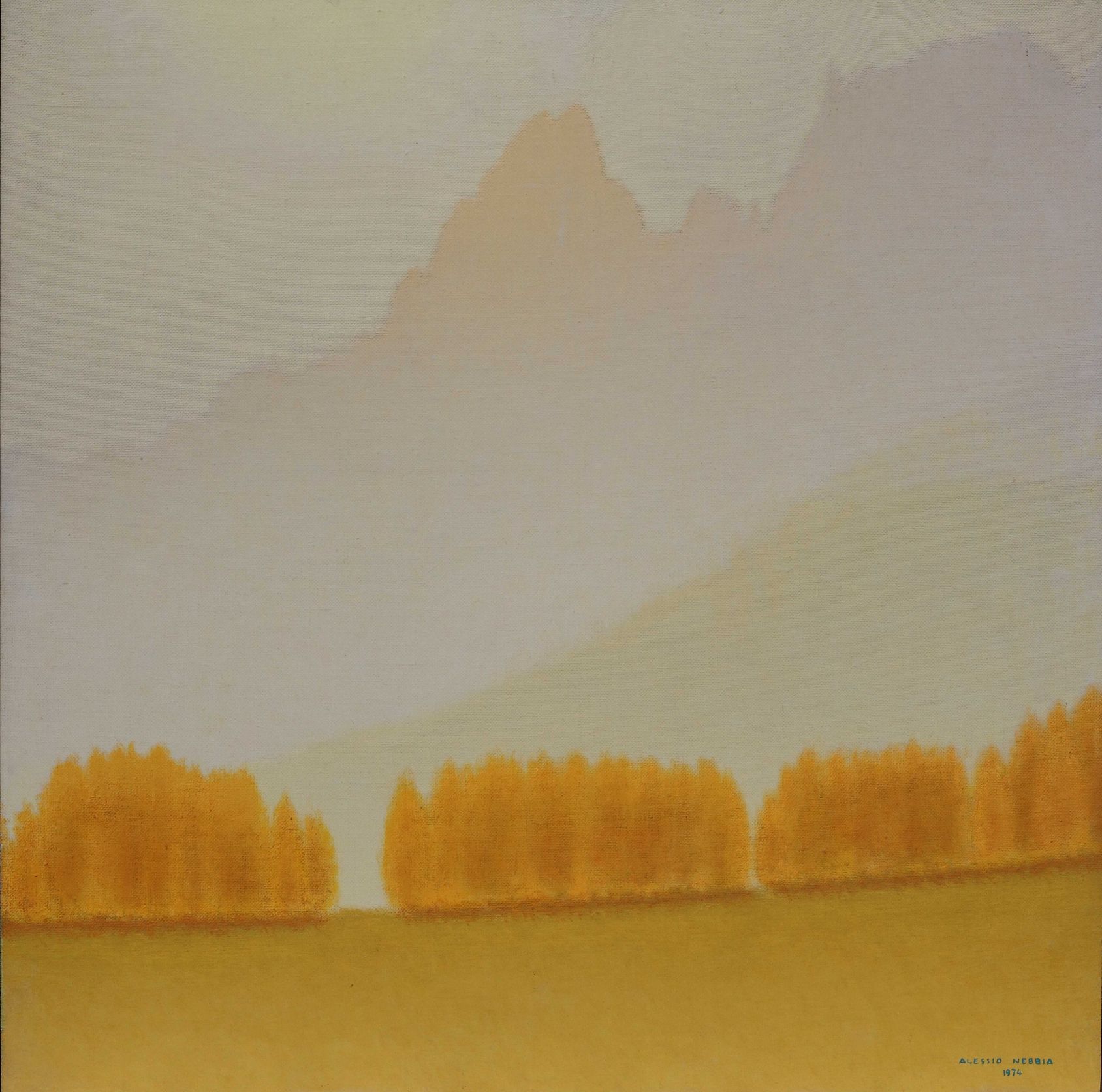
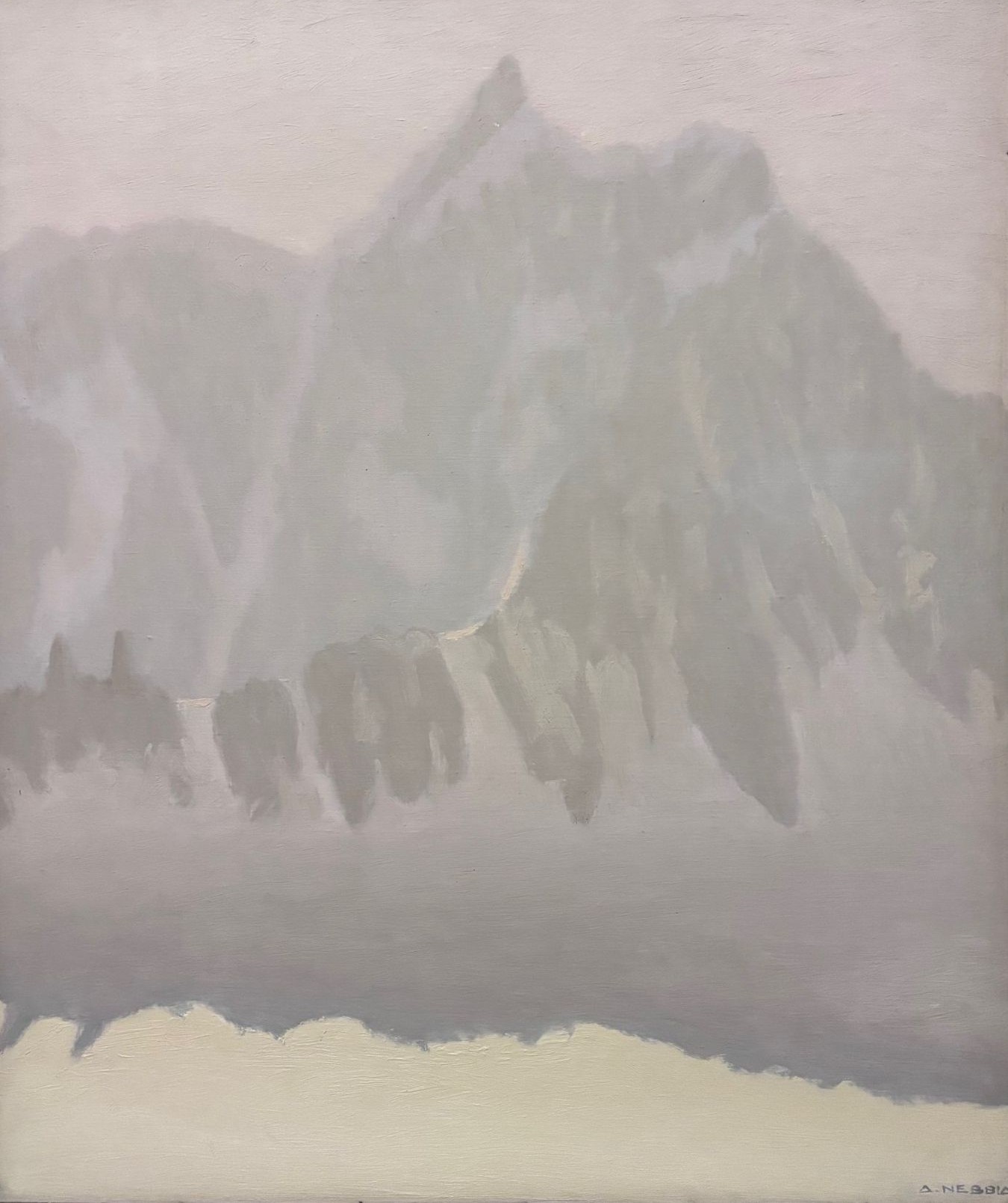
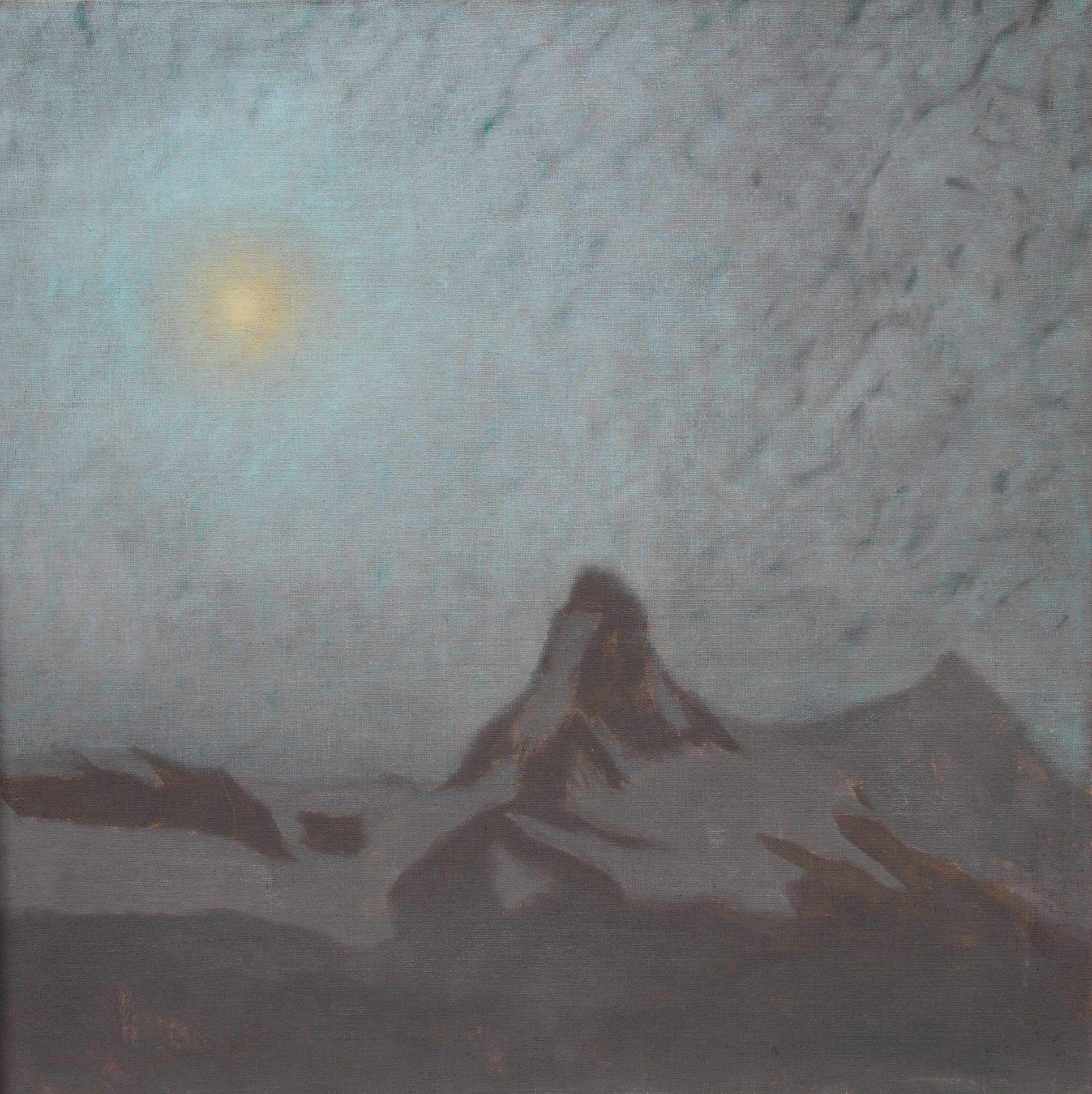
From the 1940s onwards, he devoted himself primarily to painting, inspired by the works of well-known artists active in Piedmont in the early Twentieth century, from Cesare Maggi to Giuseppe Bozzalla, Mario Reviglione and Felice Vellan. He drew significant inspiration from the work of Giovanni Segantini. After the war, painters of different experience and origins met in Courmayeur, with whom Alessio Nebbia often painted. They were Jean Hurzeler, of Swiss origin, and Ange Abrate, who later became a naturalized French citizen. They were temporarily joined by the Dominican friar Angelico Pistarino, a painter from Turin.
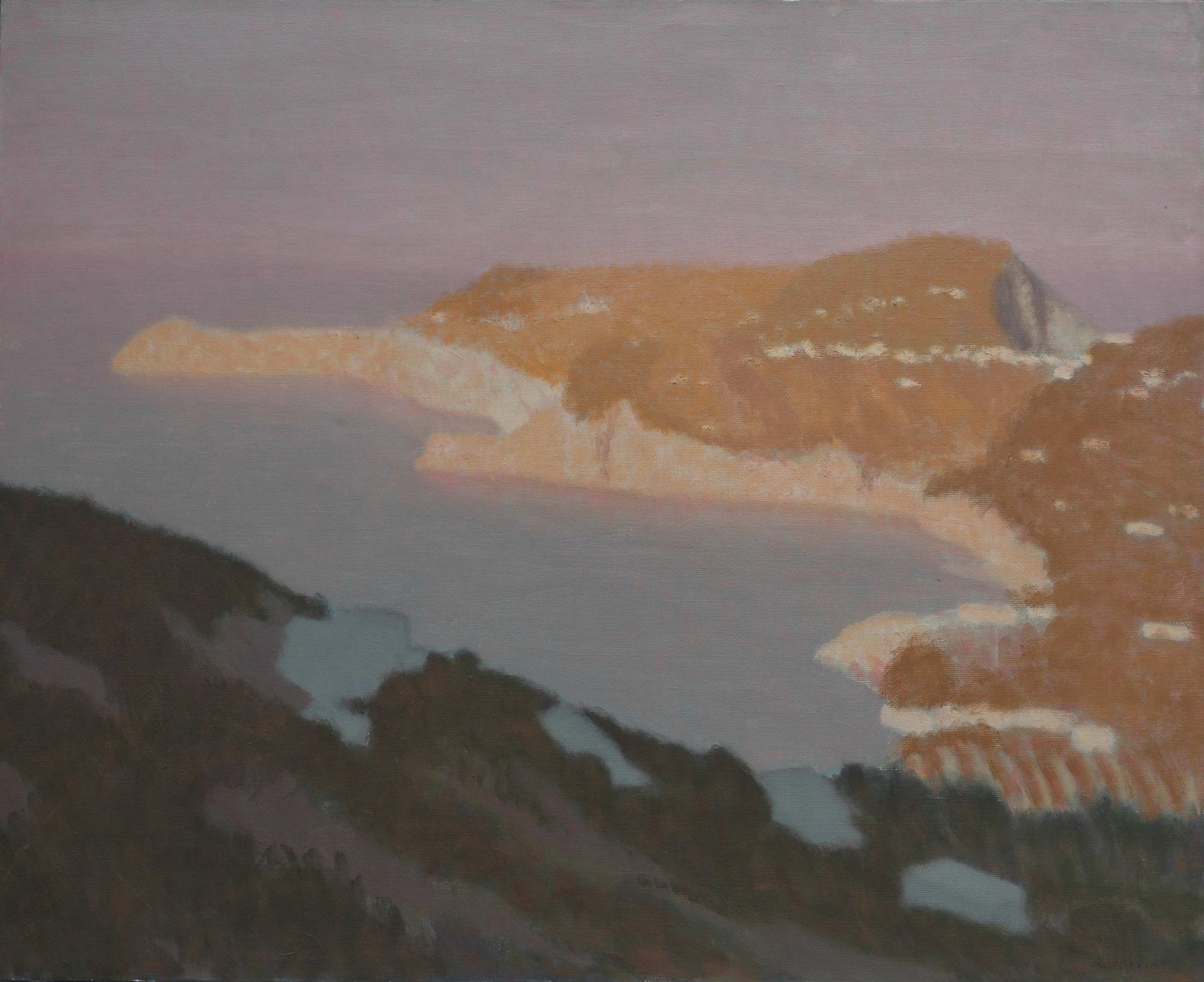
His favorite subjects were winter mountain landscapes, but he also enjoyed exploring the theme of water with delicate seascapes and lake views. After his debut exhibition in Courmayeur in 1943, his works attracted the attention of critics and gallery owners and were exhibited in several solo shows, almost annually from the 1960s onwards (in Aosta in 1952, 1962, 1979, and 1982).
Alessio Nebbia spent his last years in Cuneo, where he died on 18 October 1975.